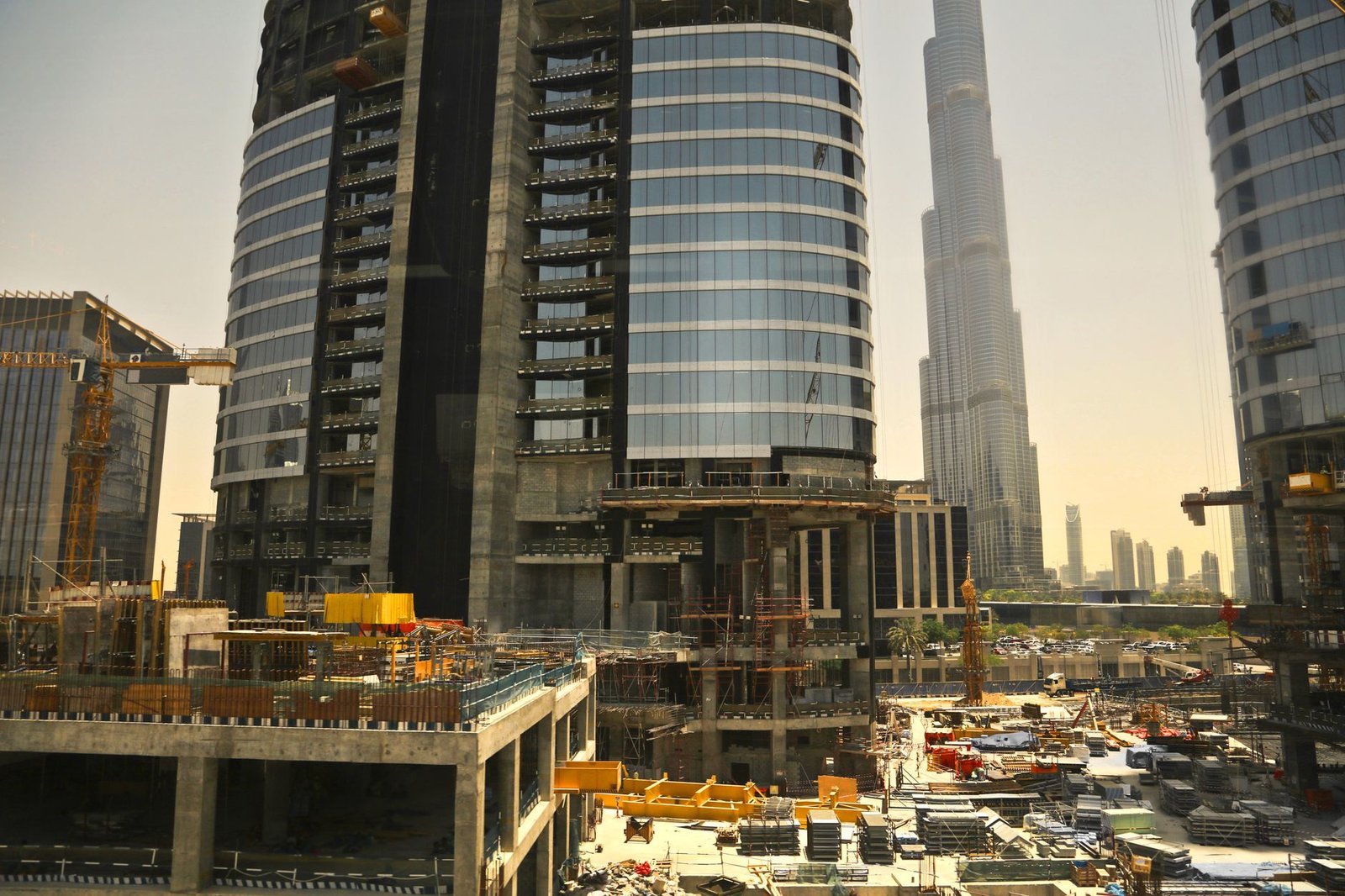
Dubai Law No. 3 of 2026 is now in force: Sheikh Mohammed bin Rashid Al Maktoum issued the building quality and safety law on 10 March 2026. It is the most consequential change to the emirate’s built-environment compliance regime in years, and unlike most regulatory updates it reaches backwards: it applies to buildings that already exist, not only to what gets built next.
For owners, developers, contractors and consulting engineers, the practical question is narrow and urgent — what has to be done, by when, and who carries the liability. This briefing sets out what the law requires, where the deadlines fall, and what we would advise clients to do first.
What the law introduces
The central mechanism is a Quality and Safety Certificate. A building obtains one only after a licensed engineering office completes a comprehensive structural and technical inspection. Without it, a building is not compliant.
Certificate validity is tiered by the age of the asset:
- Buildings under 40 years old — certificate valid for 10 years from completion
- Buildings 40 years and older — certificate valid for 5 years
That tiering is the tell. The regime is not a one-off audit; it is a recurring inspection cycle that tightens as an asset ages, and it puts older stock on a five-year clock indefinitely.
Who it applies to
The scope is deliberately wide. The law covers all buildings throughout Dubai — including those inside private development zones and free zones such as the DIFC — regardless of when they were constructed.
Free-zone inclusion is the provision most likely to catch owners out. Assets that have historically sat under a separate authority’s building rules are now inside a single emirate-wide safety framework.
What owners must do
- Obtain the Quality and Safety Certificate once construction finishes
- Carry out regular maintenance on buildings under 20 years old
- Rectify any defects identified during inspection
- Permit inspections by the competent authority
- Retain ongoing maintenance responsibility after certification — the certificate is not a discharge of duty
Dubai Municipality carries the implementation load: developing the digital systems, maintaining the building database, conducting inspections and enforcing standards.
The deadline that matters
The law takes effect 60 days after publication in the Official Gazette. Existing buildings then have one year from the effective date to comply, with a possible extension at the discretion of the chairman.
Penalties run from AED 100 to AED 1,000,000, and repeat violations double the penalty up to a ceiling of AED 2,000,000.
Why the timing makes this harder
The compliance window opens into an unusually busy market. Dubai Municipality reported 10,776 building permits issued in Q1 2026, a 12% year-on-year increase, covering 3.9 million square metres of built-up area — up 48% on the same quarter in 2025. The same period saw 824,381 cubic metres of concrete supplied to active sites, 10,855 structural inspections and 3,154 completion certificates issued.
Analysis: those figures describe a licensed engineering inspection market that is already absorbing record new-build volume. Adding a retrospective certification requirement across the entire existing stock — free zones included — into the same pool of licensed offices is a capacity question before it is a compliance question. Owners who wait for the deadline to approach will be competing for inspection slots with everyone else who waited.
What we would do first
The following is PGAN’s advisory view, not a statement of the law.
- Build the asset register before anything else. Every building, its completion date, its age band, and therefore its certificate cycle. Portfolio owners frequently cannot produce this quickly, and it determines the entire sequencing.
- Triage by age, not by value. Assets over 40 years sit on the shorter five-year cycle and should be inspected first. High-value does not mean high-risk under this law; old does.
- Confirm free-zone assets are in scope and unowned by the assumption that they are not. This is where we expect the largest number of missed obligations.
- Secure licensed engineering capacity early. Inspection supply, not owner intent, is the likely constraint.
- Separate defect rectification from certification in your budget. Inspection finds defects; rectification is a second, unbounded cost line that no certificate fee covers.
Frequently asked questions
Does the law apply to buildings completed before 2026?
Yes. The law applies regardless of construction date, and existing buildings have one year from the effective date to comply.
Are DIFC and other free-zone buildings included?
Yes. The scope expressly extends to private development zones and free zones.
Who can issue the inspection?
A licensed engineering office, which must complete a comprehensive structural and technical inspection before a certificate can be granted.
Does certification end the owner’s responsibility?
No. Maintenance obligations continue after certification, and buildings under 20 years old carry an explicit regular-maintenance duty.
Sources
Provisions of Law No. (3) of 2026 as reported by Gulf Business. Q1 2026 permit and inspection figures attributed to Dubai Municipality and reported by Gulf News. Owners should rely on the text published in Dubai’s Official Gazette and guidance issued by Dubai Municipality for compliance decisions.
PGAN advises owners, developers and contractors on construction governance and regulatory compliance across the GCC. If you are assessing portfolio exposure under Law No. 3 of 2026, our advisory practice and construction and real estate team can help you scope it. See how we work with organizations, or request advisory.